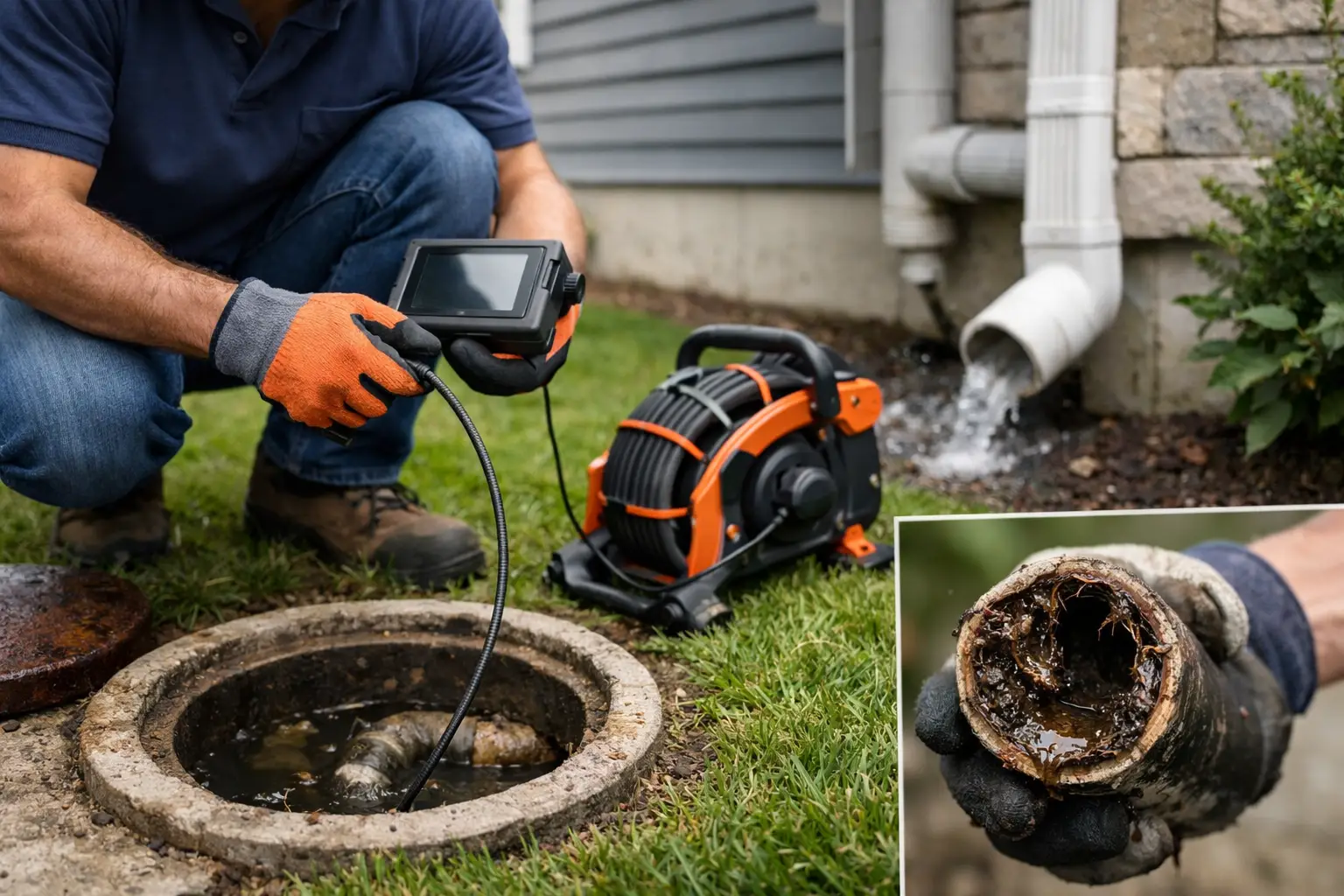
A house drainage inspection is rarely the first thing a buyer notices when viewing a property. The kitchen may be newly fitted, the walls may be freshly painted, and the garden may look well maintained. Yet the drainage system beneath the floors and outside the building can determine whether that attractive property becomes a manageable investment or an expensive problem.
For buyers, owners, and investors in Portugal, drainage deserves attention before money is committed. Older properties may have undocumented alterations, mixed pipe materials, disconnected rainwater routes, or private systems that have received little maintenance. A standard viewing will not reveal these conditions. The aim of an inspection is to replace assumptions with evidence: where the water goes, whether the pipes are functioning, and what repairs or upgrades may be required.
Why drainage risk is easy to miss
Drainage is largely hidden. Waste pipes run under slabs, through walls, beneath patios, and across land that may have been landscaped years after the original house was built. Problems can remain quiet until a high-use period, a heavy rainstorm, or a renovation changes how water moves through the property.
A slow sink does not automatically mean a serious defect. It may be a local blockage or a poorly vented branch pipe. Equally, a drain that appears to run normally during a short viewing can still have cracked sections, root ingress, poor falls, or unstable joints farther along the line. The condition of the system must be assessed in context rather than judged from one tap or toilet flush.
In Portugal, the question is also not simply whether a home is connected to a public sewer. Properties in rural and semi-rural locations may rely on septic tanks, soakaways, or other on-site arrangements. In older urban areas, drainage layouts can be complex, altered, and difficult to trace. Rainwater drainage may be separate from foul drainage, or historical work may have created connections that need closer investigation. The risk, cost, and permitted solution depend on the actual arrangement.
What a house drainage inspection should assess
A useful inspection begins by establishing the drainage layout. This includes internal waste routes, external gullies, inspection chambers, rainwater downpipes, connections to municipal drainage where present, and any private treatment or disposal system. Missing chamber covers, buried access points, and unmarked pipe routes are findings in their own right because they make future maintenance harder and more expensive.
Internal signs of poor drainage
Inside the house, the inspector looks for more than obvious leaks. Staining around lower walls, recurring mold near bathrooms, loose floor finishes, foul odors, gurgling fixtures, and slow discharge can all indicate a drainage or ventilation issue. These symptoms can also have other causes, including water supply leaks or external moisture, so they should not be treated as proof without further testing.
Bathroom and kitchen renovations deserve particular scrutiny. New fixtures are sometimes connected to old pipework with unsuitable fittings, inadequate falls, or limited access for cleaning. A finished surface can hide a technically poor installation. Where a renovation is planned, knowing the route and condition of existing drainage helps determine whether it can be retained or should be replaced while floors and walls are open.
External drainage and ground conditions
Outside, the inspection should consider whether water is being directed away from the building. Downpipes that discharge at the base of walls, blocked gullies, patios that slope toward the house, and ground levels above the damp-proof line can all increase moisture risk. These are not always sewer defects, but they are part of the wider drainage picture.
The inspection should also identify physical damage and practical constraints. Cracked chamber walls, displaced covers, root growth, broken gullies, or pipes passing beneath extensions and terraces may affect the method and cost of repair. A simple blockage near an access point is very different from a damaged pipe beneath a finished interior floor.
CCTV surveys and functional testing
Where access permits, a drainage camera survey is often the clearest way to inspect below-ground pipework. CCTV footage can identify blockages, fractures, open joints, root ingress, standing water, deformation, and unsuitable connections. It can also help confirm pipe direction and locate defects before excavation is considered.
Camera work has limits. A blocked, collapsed, or inaccessible line may prevent a full survey. Small branch pipes may not accept the camera, and a clear camera run does not prove that every concealed connection in the property is correct. Dye testing, water testing, drain tracing, and examination of chambers may be needed alongside CCTV. A reliable report should state what was inspected, what could not be inspected, and how confident the findings are.
Analyze before you negotiate or design
For a buyer, drainage findings should be translated into a decision, not left as a technical note. The key questions are straightforward: Is there evidence of an active defect? Is the system serviceable for current use? Will planned renovations increase demand or require rerouting? What work is urgent, and what can be budgeted over time?
A house with a localized blockage and accessible chambers may need routine cleaning and minor repairs. A property with repeated backups, damaged buried pipework, or a failing septic arrangement may require a larger allowance, specialist design, permits, and disruption to external areas. Neither outcome automatically makes a purchase a bad decision. The difference is whether the cost and risk are understood before the price is agreed.
For investors, drainage condition also affects program risk. A defect discovered after a new kitchen, flooring, or landscaping has been installed can force work to be undone. Early investigation is usually less expensive than late-stage correction because access is still available and renovation choices can be adjusted.
Plan repairs in the right order
Drainage work should be prioritized according to consequence, not appearance. Active sewage leakage, recurring internal backups, and defects affecting structural moisture conditions should move quickly to the top of the list. A damaged but functioning external section may be monitored or planned alongside other site works, depending on its location and likelihood of failure.
The best repair method depends on the defect. Drain cleaning may resolve grease, debris, or root-related restrictions, but it will not correct broken pipe alignment. Local excavation can be sensible when the fault is accessible. Pipe lining may reduce disruption in some situations, though it is not suitable for every diameter, collapse, connection issue, or poor layout. Full replacement may be the better long-term choice when pipes are extensively degraded or when a renovation already requires excavation.
Avoid approving work based only on a verbal diagnosis. Ask for the location of the issue, the evidence supporting the proposed repair, the expected scope, and any remaining uncertainty. If the work affects a septic tank, public connection, external discharge, or major changes to the drainage layout, confirm the local technical and permitting requirements before construction starts.
Use the findings to protect the building
Drainage is closely linked to building health. Persistent leakage can contribute to damp finishes, odors, pest activity, undermined paving, and deterioration around foundations. Poor rainwater management can saturate soil near walls and make an existing moisture problem harder to diagnose. Treating only the visible stain while ignoring the water path is a common and costly mistake.
This is why drainage assessment works best as part of a wider property health check. Moisture readings, building defects, roof drainage, site levels, and renovation plans should be considered together. Quantum EcoBuild approaches these decisions with practical construction knowledge and documented evidence, so clients can distinguish a maintenance task from a material project risk.
When to arrange an inspection
A drainage inspection is particularly worthwhile before purchasing an older home, buying a rural property, converting a building, adding bathrooms, or carrying out substantial landscaping. It is also sensible after repeated odors, slow drainage, unexplained moisture, or any sewage backup. Waiting for a complete failure rarely creates a better repair option.
The useful outcome is not a perfect promise that nothing will ever go wrong. It is a clear record of the system that could be inspected, the defects found, the limitations of the assessment, and the practical next step. When the drainage route is understood before you buy or build, you can make decisions based on facts rather than the condition of the paintwork.
Leave a Reply