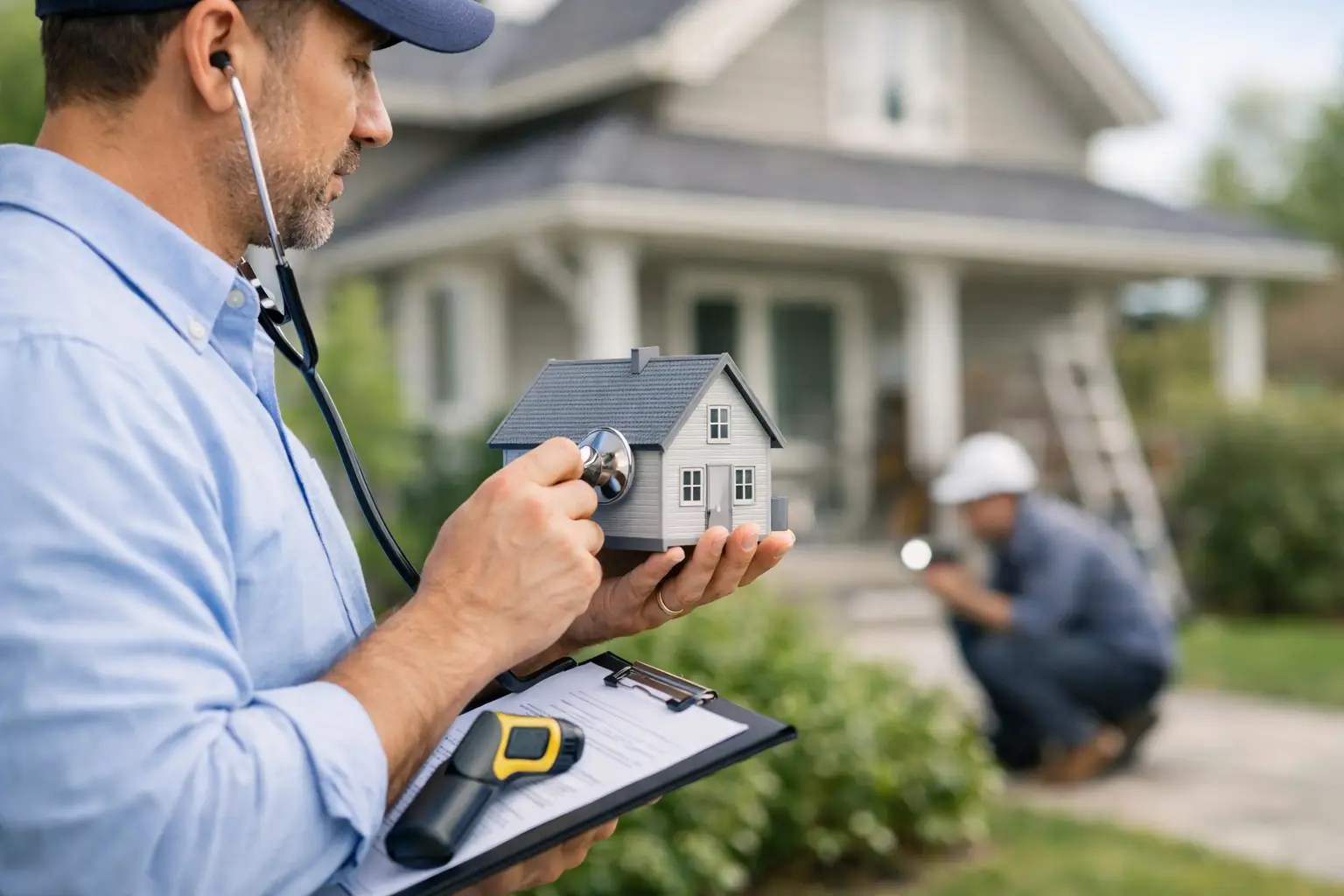
A house can look perfect during a viewing and still hide expensive problems. Fresh paint can cover moisture staining. A tidy attic can distract from roof movement. A recent kitchen update can make buyers forget to ask about drainage, wiring, or structural alterations. That is why people ask, what is a property health check, and whether it is worth doing before they commit.
A property health check is a structured, evidence-based assessment of a building’s condition, risks, and likely future needs. It goes beyond a standard viewing and, in many cases, beyond a basic survey. The purpose is not just to identify defects. It is to help you understand what those defects mean in practical terms – for safety, budget, renovation planning, and long-term ownership.
For buyers, investors, and owners in Portugal, that clarity matters. Construction methods vary by region, older buildings often come with layered repair histories, and a visually appealing property can still have hidden technical issues. A proper assessment helps you separate cosmetic appeal from actual building performance.
What does a property health check actually cover?
The exact scope depends on the property, its age, and what you need to decide. But in most cases, a property health check looks at the main building elements that affect condition, risk, and future cost.
That usually includes the roof, structure, external envelope, drainage, moisture behavior, internal finishes, windows and doors, and visible mechanical and electrical systems. It may also consider whether previous works appear technically sound and whether the property shows signs of movement, water ingress, poor ventilation, or neglected maintenance.
In a stronger version of the service, the inspection is not limited to what can be seen casually. Digital tools such as LiDAR scans and drone roof inspections can add a level of accuracy that a simple walk-through cannot provide. That matters when access is limited, roof areas are unsafe, or layout and measurement accuracy will affect renovation planning.
The key point is that a property health check is not a box-ticking exercise. It is a diagnostic process. It asks: what condition is this building really in, what problems are developing, and what are the likely consequences if nothing is done?
What is a property health check used for?
Most people use it before a purchase, but that is only one scenario. It is equally useful before renovation, before setting a maintenance budget, or when trying to understand why a property is underperforming.
If you are buying, the health check helps you judge whether the asking price reflects the true condition of the building. A defect is not always a deal-breaker. But it should be known, costed, and factored into the decision.
If you are renovating, the assessment helps you avoid designing work on top of unresolved problems. There is little value in planning a new interior if the roof is leaking, moisture is moving through walls, or earlier structural changes were poorly executed.
If you already own the property, the check can help prioritize work. Not every issue needs immediate action. Some defects are urgent because they affect structural integrity or water penetration. Others can be monitored and addressed in phases. The value is in knowing the difference.
How it differs from a standard property viewing
A viewing is designed to help you see whether you like the property. A property health check is designed to help you understand whether the property makes technical and financial sense.
That difference is bigger than it sounds. During a viewing, attention tends to go to layout, finishes, light, and location. During a health check, attention shifts to construction reality. Are cracks superficial or movement-related? Is roof aging cosmetic or near failure? Are damp marks old, active, or seasonal? Do visible alterations suggest that larger unseen issues may exist?
This is where experienced interpretation matters. Buildings rarely present problems in a neat, isolated way. Moisture may be related to drainage, roof detailing, ventilation, or a combination of factors. Cracking may be harmless settlement, or it may point to structural stress. The right assessment does not just record symptoms. It interprets them.
A property health check is not just about defects
One of the common misunderstandings is that the process is only there to find faults. In practice, it is just as valuable for identifying opportunities.
A sound building with manageable issues may be an excellent purchase if the buyer understands the work required. A poorly organized property may have strong renovation potential if the structure, roof, and envelope are fundamentally reliable. On the other hand, a beautiful property with major water ingress, failing services, or difficult access constraints may be less attractive than it first appears.
In other words, the check helps define both risk and potential. That is especially useful for investors and overseas buyers who need a more objective basis for comparing properties.
What good reporting should tell you
A useful property health check should leave you with more than a list of observations. It should give you a clear decision framework.
That means identifying the condition of key building elements, highlighting areas of uncertainty, and explaining the likely implications for cost and timing. If there is evidence of roof deterioration, you need to know whether local repair is likely or whether broader replacement should be expected. If moisture is present, you need an informed view on probable causes and what further investigation or remedial work may be justified.
The best reports also help you sequence decisions. Some issues require specialist follow-up. Some call for immediate budget allowance. Some simply need monitoring. Without that prioritization, even accurate findings can be hard to act on.
Why this matters in Portugal
Portugal offers attractive buying opportunities, but it also presents conditions that can confuse buyers who are unfamiliar with local building stock. Older masonry buildings, mixed construction standards, coastal exposure, roof aging, patch repairs, and undocumented alterations are all common realities.
That does not mean properties are inherently poor quality. It means condition has to be understood properly. Two homes with similar appearance and price can carry very different technical risk. One may need routine upgrades. The other may need extensive envelope repairs, drainage intervention, and major service replacement.
For expatriates in particular, a property health check reduces reliance on visual impressions and assumptions carried over from another country. What matters is not what the building seems like at first glance, but what the evidence shows.
When should you get one?
The best time is before a binding financial commitment becomes difficult to unwind. For buyers, that usually means as early as access and transaction timing allow. For renovation projects, it should happen before design decisions and contractor pricing begin.
It can also be valuable when a property has been empty for some time, after storm exposure, or when recurring issues such as damp, cracking, or leaks have never been properly diagnosed. Waiting until works are already underway usually means you are paying to solve problems in a more reactive and expensive way.
What a property health check cannot do
It is worth being realistic. No non-invasive inspection can reveal every hidden defect. Finishes can conceal poor workmanship. Concealed pipework and wiring cannot always be fully verified without opening up. Some problems only become clear through seasonal change or deeper testing.
That is not a weakness of the process. It is simply part of responsible building assessment. A good advisor will be clear about what is confirmed, what is suspected, and where further investigation is sensible. Facts matter, but so do limits of access and evidence.
This is also why experience matters as much as technology. Scanning tools and aerial inspection improve visibility and measurement, but they do not replace construction judgment. The real value comes from combining accurate data collection with practical interpretation rooted in site experience.
Who benefits most from a property health check?
Anyone making a meaningful financial decision on a building can benefit, but some clients gain even more. Buyers considering older homes, investors comparing renovation opportunities, and owners planning major works usually have the most to lose from incomplete information.
That is where a consultative approach becomes useful. Firms such as Quantum EcoBuild approach the process as more than inspection. The goal is to help clients analyze condition, understand implications, plan next steps, and avoid committing money based on assumption.
A good property decision is rarely about finding a perfect building. It is about knowing what you are taking on, what it will cost to manage, and whether the asset still makes sense once the facts are on the table.
If you are asking what is a property health check, the simplest answer is this: it is a way to replace guesswork with evidence before a building becomes your responsibility. And when the numbers involved are significant, that kind of clarity is not an extra. It is part of buying wisely.
Leave a Reply