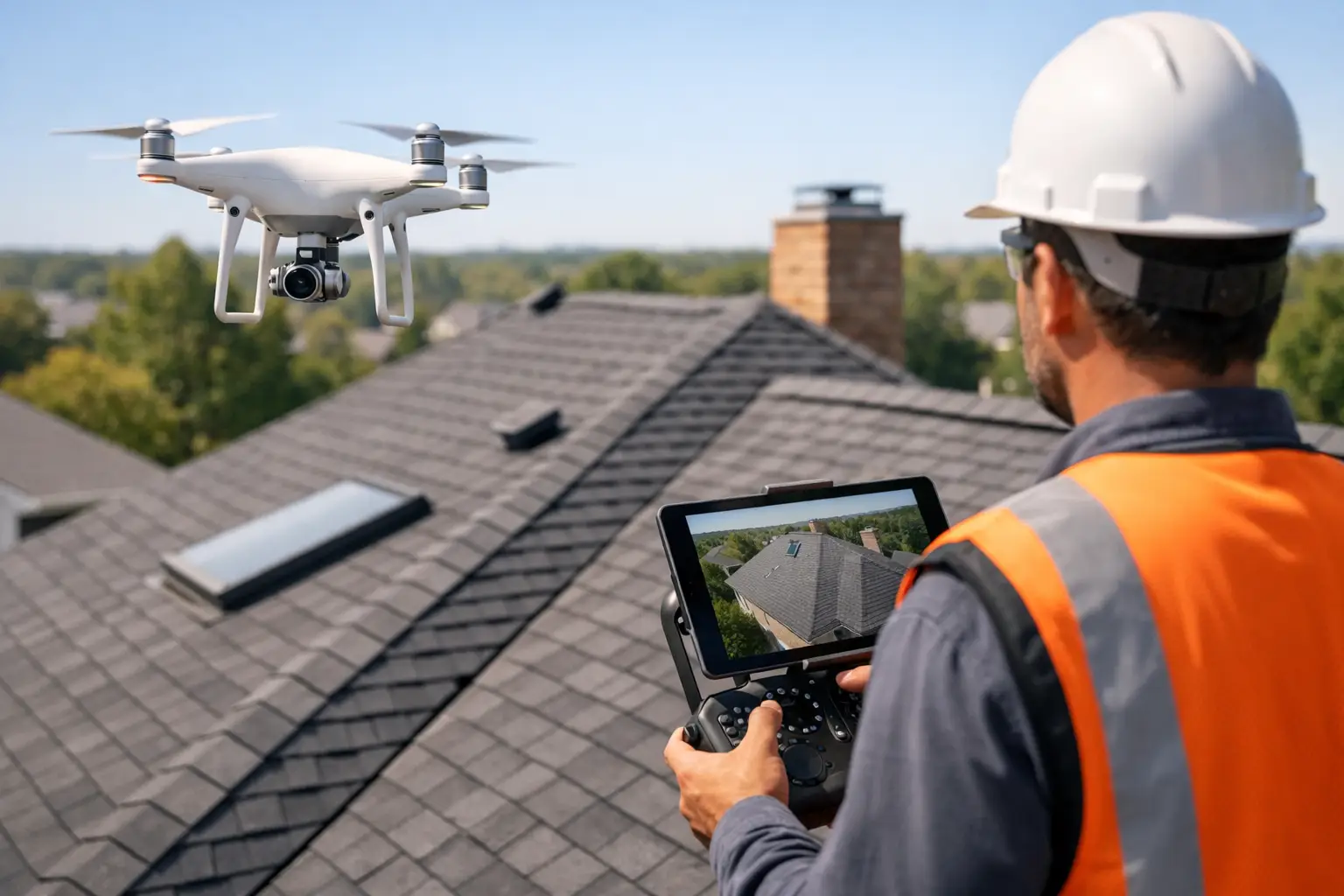
A roof can look fine from the ground and still hide the most expensive problem on the property. Cracked tiles, failed flashing, ponding water, patched repairs, and movement around chimneys often go unnoticed until moisture reaches the structure below. That is why drone roof inspections have become a practical first step for buyers, owners, and investors who want facts before they commit.
For property decisions in Portugal, the roof matters more than many buyers expect. Exposure to coastal wind, strong sun, heavy seasonal rain, and long periods of deferred maintenance can all shorten the life of roofing materials. On older homes, especially those that have been altered over time, the visible finish tells only part of the story. Aerial inspection helps you see the actual condition, not just the sales presentation.
What drone roof inspections actually show
A good drone inspection is not just a set of dramatic aerial photos. It is a controlled visual assessment of the roof covering, drainage paths, junctions, and vulnerable details. High-resolution imaging makes it possible to review tile alignment, slipped or broken pieces, ridge condition, flashing continuity, moss buildup, debris accumulation, and signs of previous repair work.
On flat or low-slope roofs, the value is slightly different. The focus often shifts toward drainage performance, membrane condition, standing water patterns, edge detailing, and penetrations around vents or equipment. On pitched roofs, the inspection is more about the integrity of the outer skin and the points where water is most likely to enter.
The main advantage is perspective. A roof is a system, and many defects only make sense when viewed in relation to surrounding slopes, valleys, parapets, gutters, and adjoining structures. Ground-level viewing rarely gives that context.
Why drone roof inspections make sense before purchase
If you are buying a property, roof defects can change the economics of the deal very quickly. What seems like minor maintenance can become a wider repair program once access equipment, matching materials, timber repairs, waterproofing, and interior moisture damage are included. The issue is not just whether the roof leaks today. The real question is whether the roof is near the point where significant capital spending becomes unavoidable.
This is where drone roof inspections are useful. They help separate cosmetic aging from higher-risk defects. A weathered roof may still be serviceable. A roof with displaced tiles, failed edge details, and evidence of repeated patching is a different situation. The photos provide a clearer basis for negotiation, budgeting, or deciding to walk away.
For international buyers and expatriates, this matters even more. If you are assessing property remotely or working within an unfamiliar construction market, you need evidence that is easy to review and explain. Clear roof imagery supports better conversations with advisors, contractors, and sellers because everyone can look at the same facts.
Safety is part of the value
Traditional roof access is not always simple or sensible. Many properties have steep pitches, fragile tiles, poor perimeter access, or surrounding obstacles that make ladders and scaffold towers difficult to use. In some cases, physically walking the roof can cause damage or create liability.
Drone inspection reduces that problem. It allows a trained operator to assess hard-to-reach areas without placing a person directly on the roof for the first review. That does not mean drones replace hands-on inspection in every case. If structural movement, severe decay, or concealed defects are suspected, closer physical investigation may still be needed. But as an early-stage diagnostic tool, the drone often provides the safest and fastest way to identify whether more invasive inspection is justified.
What a drone can find – and what it cannot
This is where a grounded approach matters. Drones are excellent for surface condition and visual pattern recognition. They can identify missing tiles, open joints, damaged flashing, blocked gutters, cracked ridge lines, localized staining, vegetation growth, and areas that suggest poor drainage or failed repairs.
What they cannot do is see through the roof assembly. A drone image alone cannot confirm the condition of hidden battens, underlayment, insulation, or internal timber structure. It also cannot measure moisture inside the roof build-up unless the inspection includes thermal imaging and the conditions are right for meaningful interpretation.
Even thermal work has limits. Surface temperature differences may suggest trapped moisture, air leakage, or voids, but false readings are possible if the timing, weather, or material type is not properly considered. That is why drone data should be interpreted by someone who understands building behavior, not treated as a simple photo exercise.
The difference between footage and useful diagnosis
Not all drone services are equal. The issue is not whether someone can fly over the building. The issue is whether the inspection is organized around property risk.
A useful roof inspection starts with the purpose. Are you buying the property? Planning renovations? Investigating a leak? Assessing storm damage? Monitoring an older roof before deciding on repair versus replacement? The inspection route, image priorities, and reporting should change depending on that goal.
The second difference is construction knowledge. Good imagery has to be connected to practical judgment. A broken tile is obvious. What matters is whether it sits in a critical drainage line, whether similar failures appear elsewhere, whether there is evidence of repeated intervention, and whether adjacent details suggest the problem has been active for some time. Facts need context.
That is where a firm like Quantum EcoBuild adds value. The technology captures the evidence, but construction experience helps turn that evidence into decisions about urgency, cost exposure, and next steps.
When drone roof inspections are especially useful
They are particularly effective in pre-purchase assessments, after periods of heavy rain, before listing a property for sale, and at the planning stage of renovation work. They are also useful for owners managing second homes or rental properties who cannot inspect the building regularly in person.
On older Portuguese homes, aerial review can also help identify piecemeal alterations. It is common to find patched roofs, changed materials, improvised drainage solutions, or transitions between old and new work that deserve closer attention. Those details matter because they often indicate where future maintenance will concentrate.
For investors, the benefit is straightforward. Better roof information supports more accurate capex planning and reduces the chance of being surprised by urgent water-related repairs after completion. For homeowners, it supports maintenance planning before a small defect becomes interior damage.
How to use the findings
The best use of roof inspection data is not alarm. It is prioritization. Some findings call for immediate repair because they create an active path for water entry. Others belong in a medium-term maintenance plan. Some simply confirm that the roof is aging normally and should be monitored, not replaced.
This distinction matters because overreaction can be expensive. So can delay. If the report shows isolated tile damage but the drainage system and detailing remain sound, targeted repairs may be enough. If the inspection reveals widespread defects, multiple historic patches, failing flashings, and signs of poor water management, partial repairs may only postpone a larger intervention.
The practical next step is to connect the roof evidence to a wider property strategy. If you are buying, use the findings to revisit your budget and negotiation position. If you are renovating, align roof work with insulation, waterproofing, solar planning, or structural upgrades so you do not pay twice for access and disruption. If you already own the property, create a maintenance schedule based on actual condition rather than guesswork.
A clearer view leads to better property decisions
Roofs fail quietly at first. A small defect at the surface can become rot, staining, mold, damaged finishes, and avoidable cost long before the problem is visible inside. Drone roof inspections help close that gap between appearance and reality.
They are not a magic solution, and they do not replace every other form of building assessment. But they are an efficient way to see critical parts of a property that buyers and owners too often leave to assumption. When the goal is to know what you are buying, what you are maintaining, or what you are about to renovate, a clear roof assessment is not a luxury. It is basic due diligence.
If a property decision depends on the condition of what sits overhead, the smartest step is simple: get evidence first, then make the call.
Leave a Reply